

If you’re looking to explore one of the most beautiful places on Earth, Los Glaciares National Park in southern Argentina should be at the top of your list. The park is home to some of the world’s most stunning landscapes, featuring towering mountains, shimmering lakes, and, most notably, magnificent glaciers.
Among these glaciers, the Perito Moreno Glacier stands out as one of the most impressive and popular. Known as the ‘White Giant,’ this natural wonder is an absolute must-see for anyone visiting Patagonia. Its vast size, brilliant blue hues, and thunderous sounds make it an unforgettable experience.
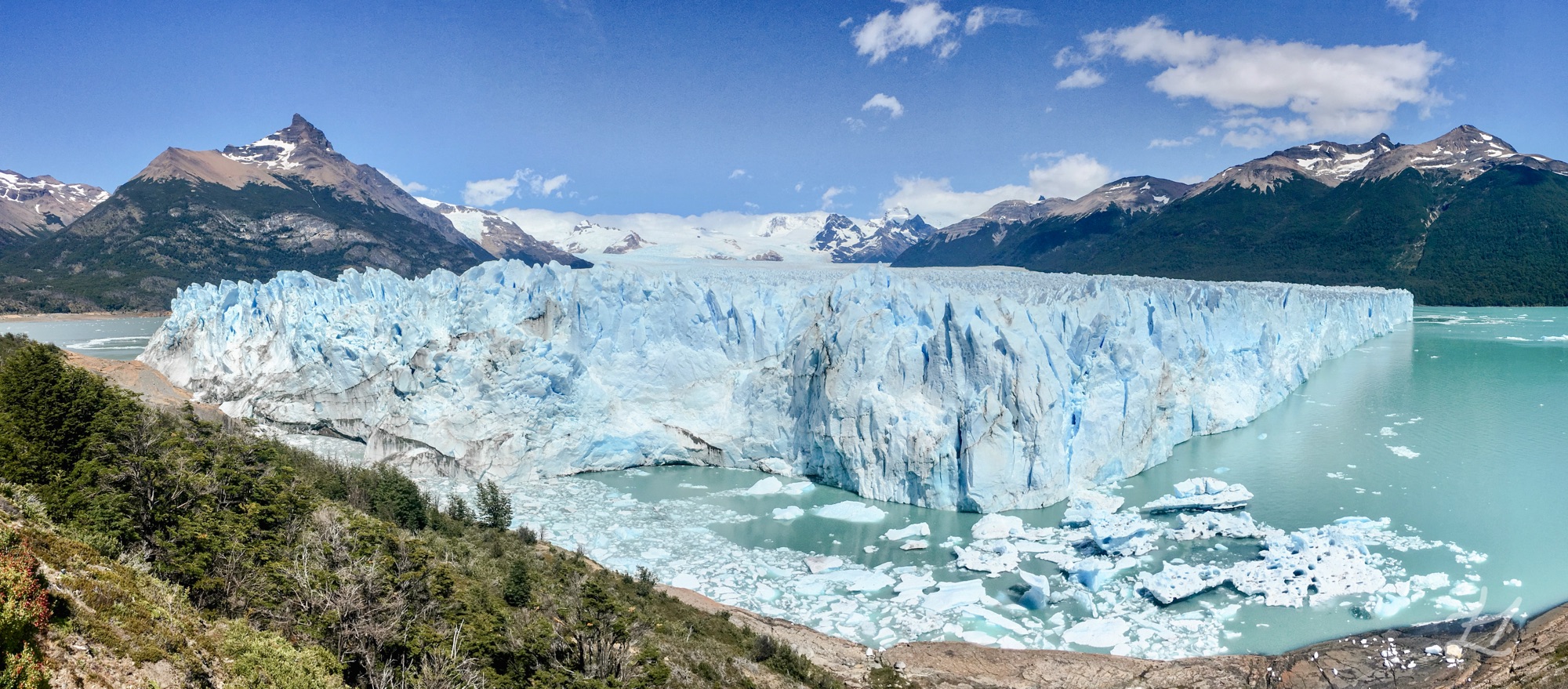
Imposing and Thundering
Stretching an impressive 5 kilometres wide and standing up to 75 metres tall, Perito Moreno is a moving spectacle, advancing about 2 inches daily. What makes this glacier unique is its location in a valley, where it flows directly into Lake Argentino rather than into the ocean like most other glaciers. This formation creates a natural dam for the lake. Its immense size (nearly 30 kilometres long!) ensures it will continue to play this crucial role.
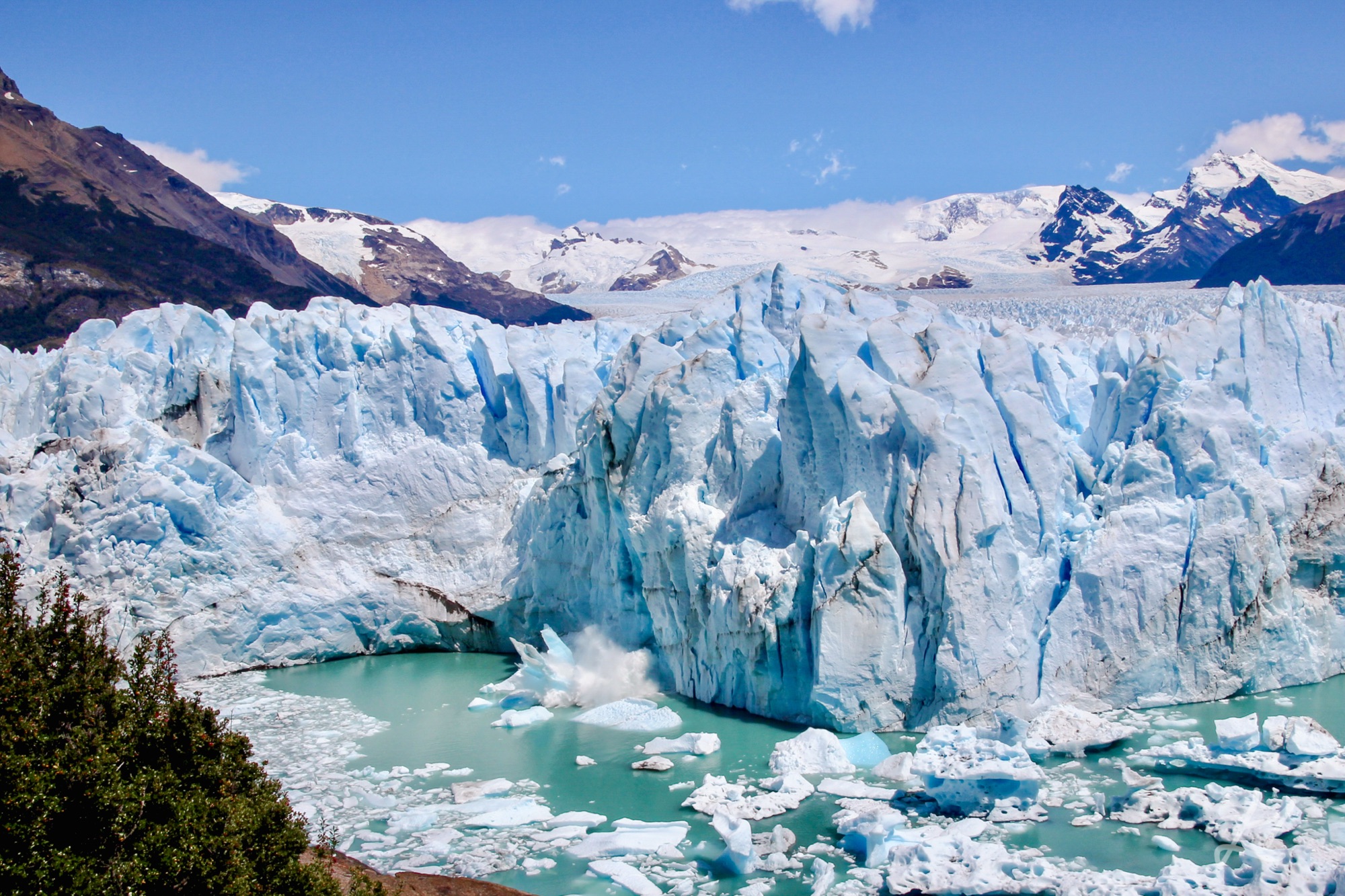
Every day, chunks of ice break off (or calve) from the glacier and crash into the lake below, offering a spectacular show. Calving is a natural process that has shaped this landscape for thousands of years. It’s also essential for the environment, creating new habitats for wildlife and putting nutrients into the water.
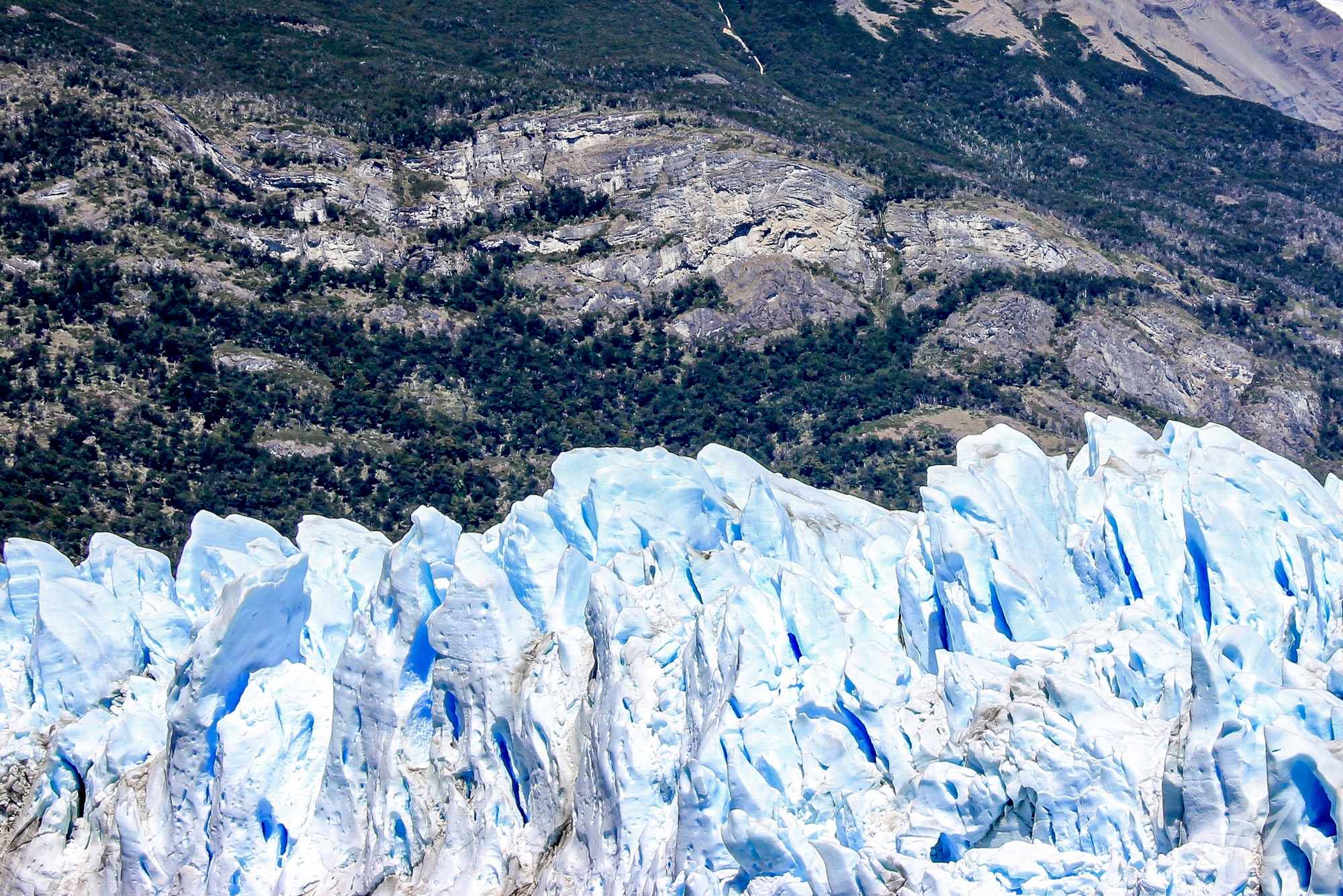
As you stand there, you’ll likely hear the thunderous cracking sound before you see the ice fall. An experience that’s both exhilarating and mesmerising. Watching the jagged pieces of ice crash into the lake and create rippling waves is utterly captivating. The glacier’s texture, with its sharp, irregular peaks, and the striking azure blue that peeks through the crevices, is a feast for the eyes.


Growing bigger?!
Interestingly, while most glaciers are retreating due to climate change, Perito Moreno is actually getting bigger! Every year, it grows by about two meters! Scientists attribute this growth to its unique location, where heavy snowfall can outpace melting. They also believe that its steep angle towards the lake gives it extra resilience.
There are two other glaciers known for growing too; the Chacaltaya glacier in Bolivia and the Aletsch glacier in Switzerland. It’s also the third largest reserve of fresh water on the planet, surpassed only by the Antarctic and Greenland ice sheets.
Getting there
The journey to Perito Moreno from El Calafate takes about 1.5 hours by bus, and leave around 8 or 9am. If you prefer a guided experience, many companies offer tours that include transportation. This is what I did personally, and it made the experience more enriching and simpler.
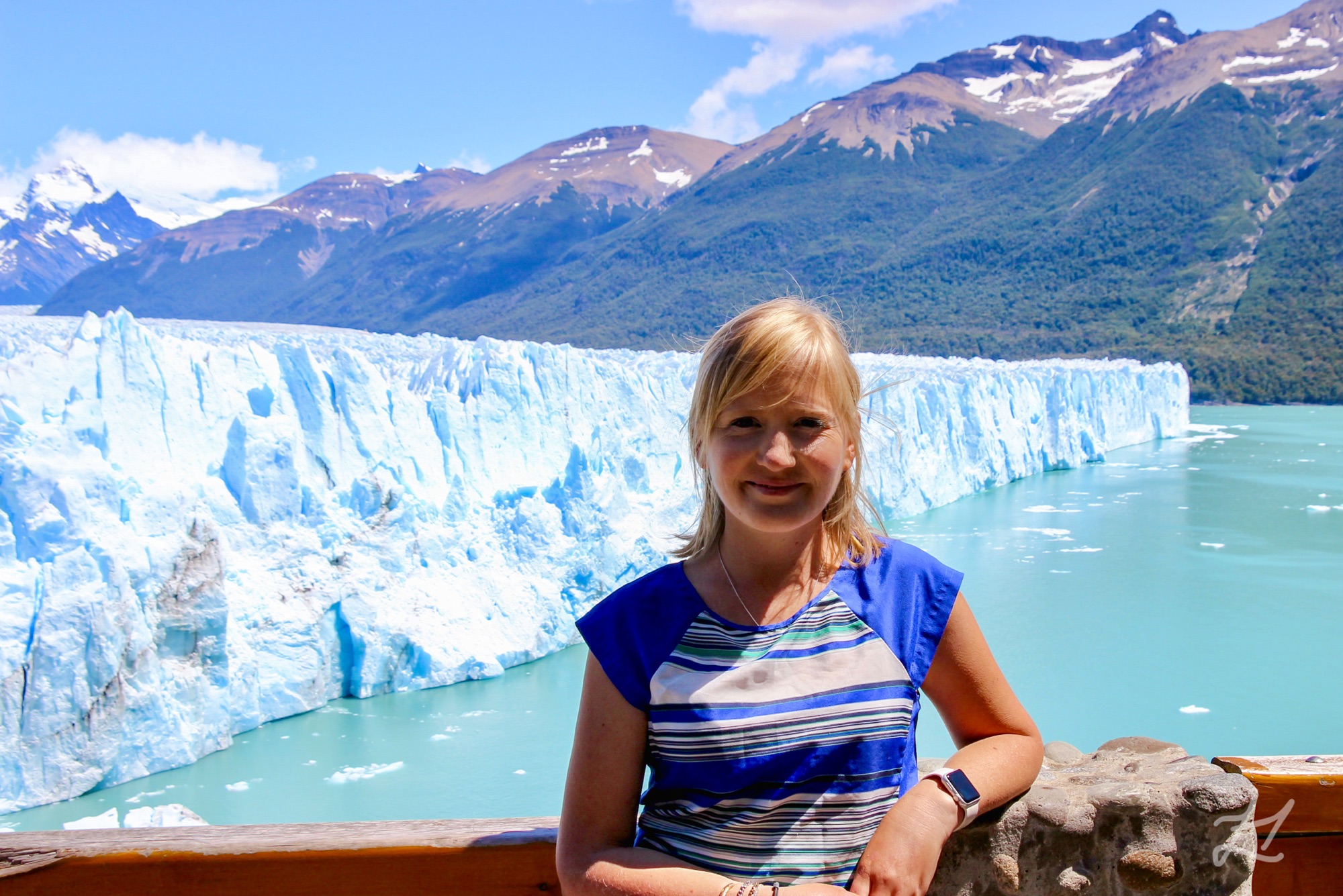
One of the best ways to experience the Perito Moreno Glacier is by exploring the extensive network of wooden walkways. These pathways are well-maintained and accessible, offering a series of viewpoints that give you different perspectives of the glacier. Entry to the national park is currently 30,000 pesos, but considering the views, it’s well worth the expense. Alternatively, you can choose to pay extra to go around the glacier in a boat, or trek on it!
The weather can be unpredictable in Patagonia, so dressing in layers is essential. The best time to visit Perito Moreno is during the Southern Hemisphere’s summer months, from November to March, when the days are longer and the weather is more favourable.
I’m planning to visit this incredible glacier again next year with my daughter. There’s something special about sharing such an awe-inspiring place with her. If you’re considering a trip, I hope this guide helps you plan your adventure.

Lore & Tempo is where motherhood meets adventure. I’m Ren – storyteller, explorer, and single mum in Wellington, New Zealand. I’ve been lucky enough to wander through 45 countries. 15 of them with my +1, Kaydes, either strapped to my front, on my hip, or running ahead on her own adventures. I created this space to share single parent life, travel tips, and the joy of exploring the world.

I want to go there too!
Author
It really is an incredible spot 😍