
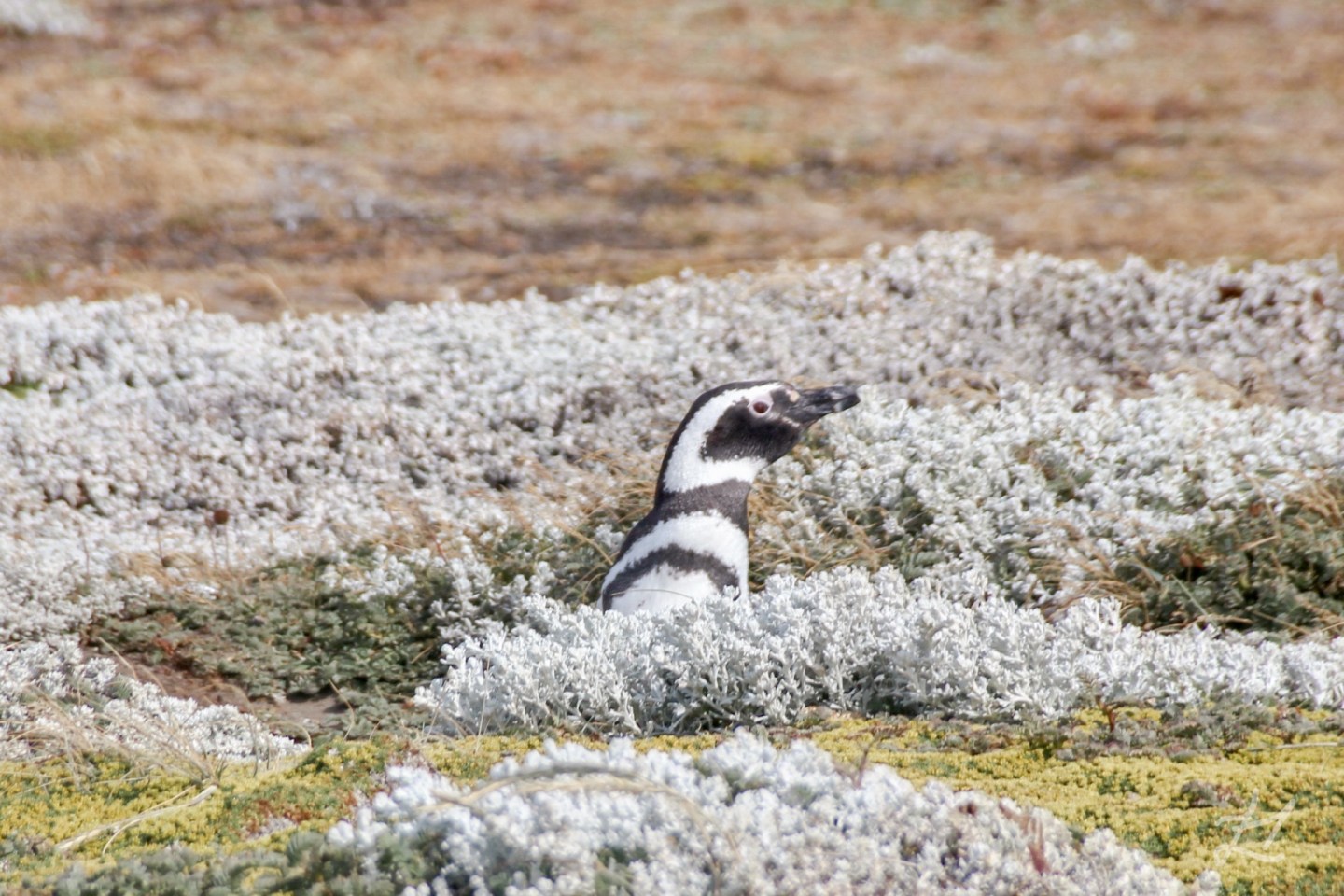
I have this weird habit of planning epic trips, only to have one magical moment sneak up and totally steal the show! Case in point: the penguins in Patagonia.
When I first visited back in 2016, I wasn’t chasing penguins. I was chasing some R&R after tackling the Torres del Paine trek. My legs were wrecked. My backpack stank of effort. I just wanted a hot shower and to not move for at least a week.
But while lying low in Punta Arenas, I spotted a local flyer – penguin colonies nearby. Penguins? In Chile? That got my attention! Exhaustion faded. I booked a tour that same day. What followed was one of those rare travel moments that lodges in your heart forever. Pure, unexpected joy.
Fast forward to this year. In October, I’ll be heading back to Patagonia but this time with my mum and Kaydes. Three generations together, boarding a boat across the Strait of Magellan to Isla Magdalena to visit the penguins. It’s a full-circle return, but with little hands to hold and new memories to make.
If you’ve ever dreamt of seeing penguins in the wild, or if you’re planning a trip to this corner of Patagonia, here’s what to expect, and why this region continues to feel so special to me.
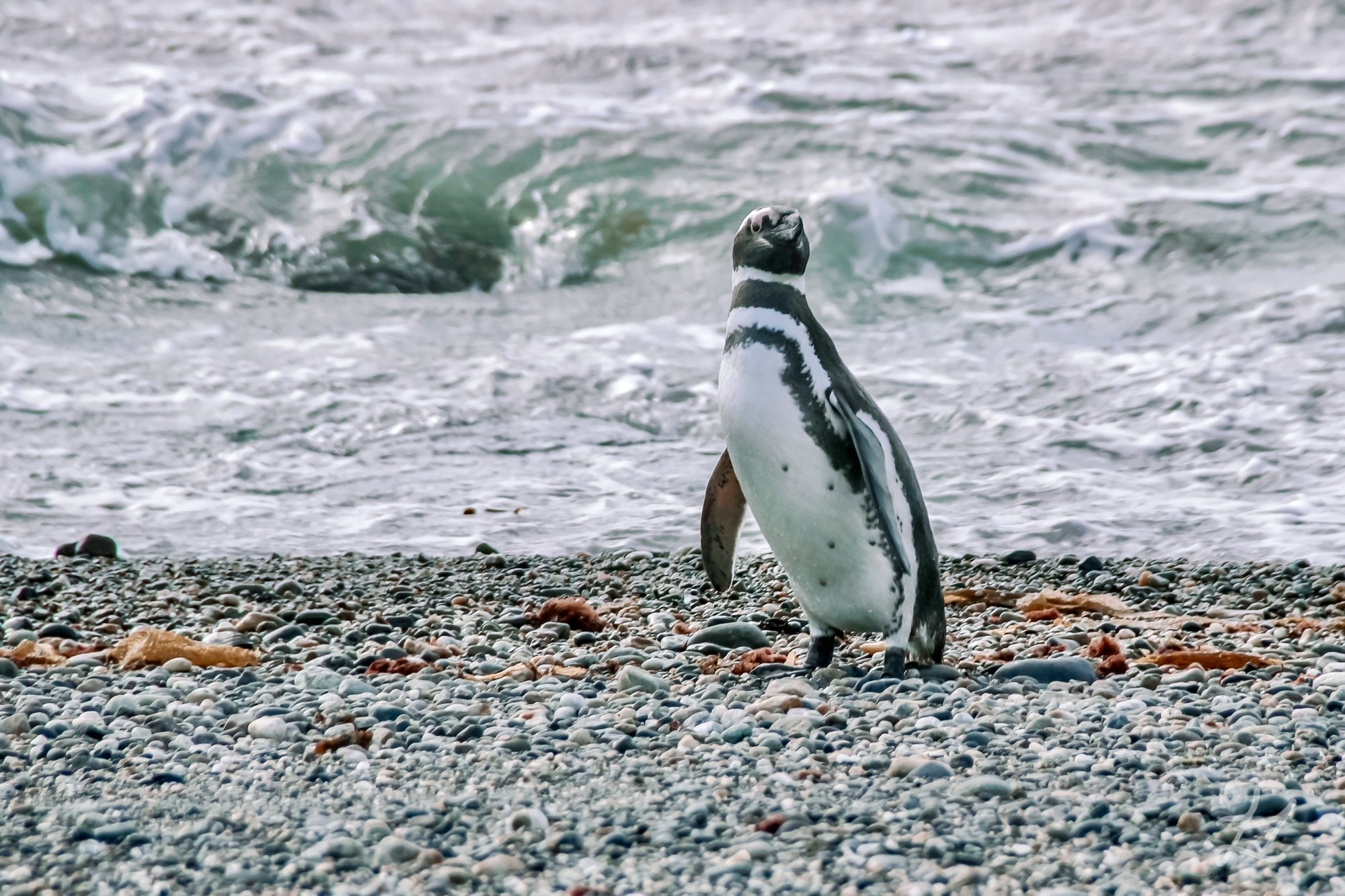
Why Patagonia Is Penguin Paradise
Penguins thrive where ocean currents meet, bringing a rich supply of fish, squid, and krill. Patagonia’s southern coastline offers exactly that; cold waters, minimal human disruption, and protected areas for nesting. It’s home to four penguin species:
- Magellanic – the most common here
- King – tall, sleek, and regal
- Gentoo – fast swimmers with bright feet
- Macaroni – rare but unforgettable, with wild yellow crests
Each species has its quirks, but all are mesmerising to watch in the wild.
The First Penguin Encounter – Seno Otway
The first colony I visited was at Seno Otway, a smaller Magellanic penguin site tucked about an hour’s drive from Punta Arenas. The surrounds were peaceful and raw, and I remember crouching low on the trail, hoping for a quiet moment. Then suddenly, some commotion.
A line of Magellanic penguins emerged from the bushes, single file, like they were late for something! I froze. They didn’t. They just marched past, focused and determined, with that signature penguin waddle that somehow looks both dignified and cute. I started laughing. Out loud. By myself. I couldn’t help it. It was so unexpected, and absolutely surreal.
Sadly, that colony has since moved on. Mining activity nearby disrupted the environment, forcing the penguins to relocate. It’s a gentle reminder: these moments are fragile. If we’re lucky enough to see wildlife like this, we need to treat it with care.

Magellanic Penguins on Isla Magdalena
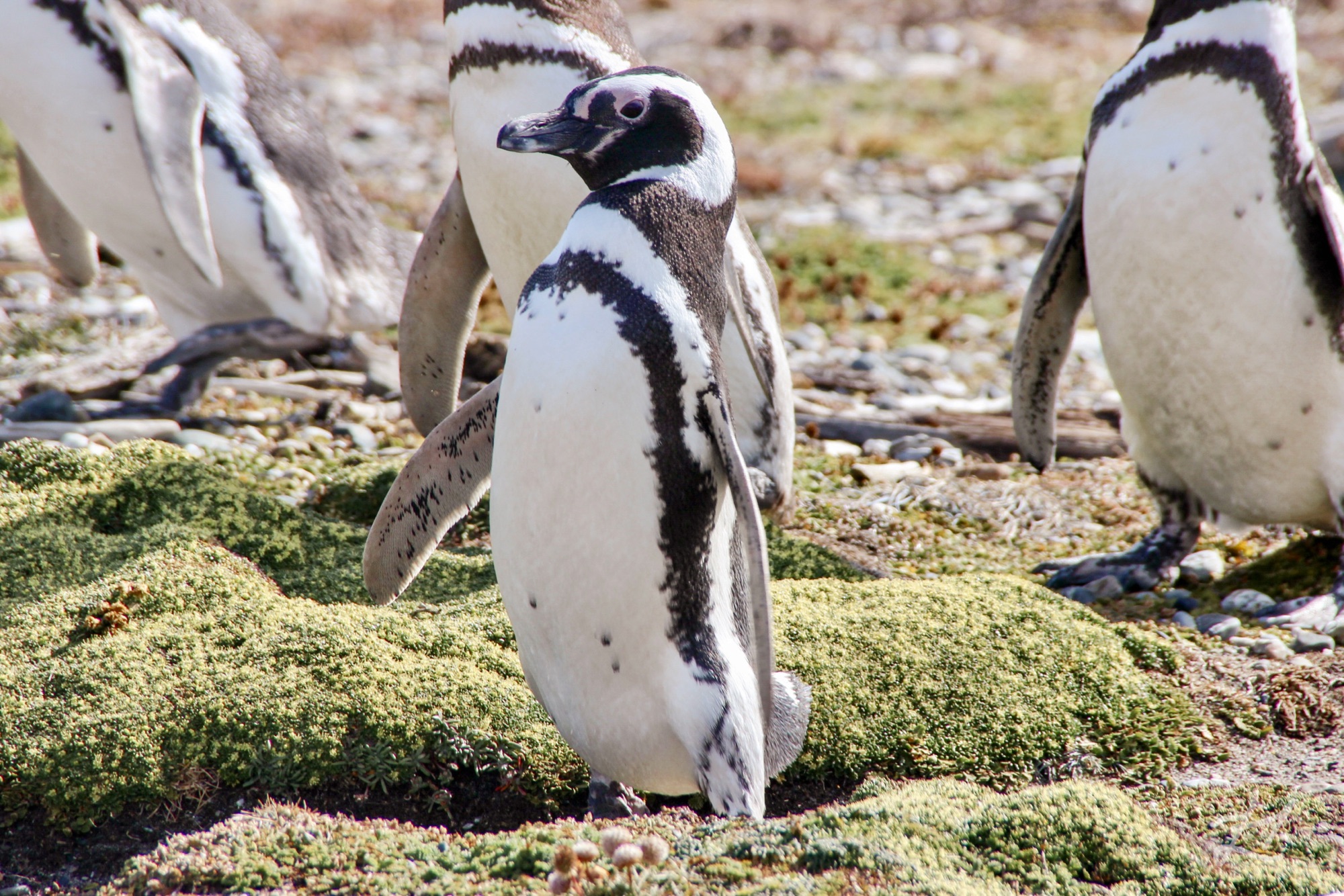
This October, we’ll be touring Isla Magdalena, home to one of the largest Magellanic penguin colonies in Chile. Tens of thousands gather here between September and March. By October, they’re settling into their burrows, pairing up, and preparing to nest. At their peak in January, up to 60,000 breeding pairs make this place their seasonal stomping ground!
We’ll follow marked trails while the penguins go about their business. Some crossing our paths, others arguing over burrow space, all completely unbothered by our presence.
Magellanic penguins are named after Ferdinand Magellan, the Portuguese explorer whose crew first spotted them in 1520 while navigating the strait. They grow to about 70cm tall, weigh up to 6kg, and build burrows in the ground to shelter their eggs from predators and wind. Their calls are loud, strange, and unmistakable – crossed between a donkey and a foghorn! When they’re not waddling adorably, they’re pro diving up to 75 metres deep in search of squid, krill, and fish.
Watching them interact is oddly relatable. They like personal space, have loud opinions, and always seem to be negotiating something.
King Penguins of Tierra del Fuego

On that same 2016 trip, I made the long journey to Pingüino Rey Reserve in Tierra del Fuego. It was a full-day mission – bus, ferry, more bus – but worth every second.
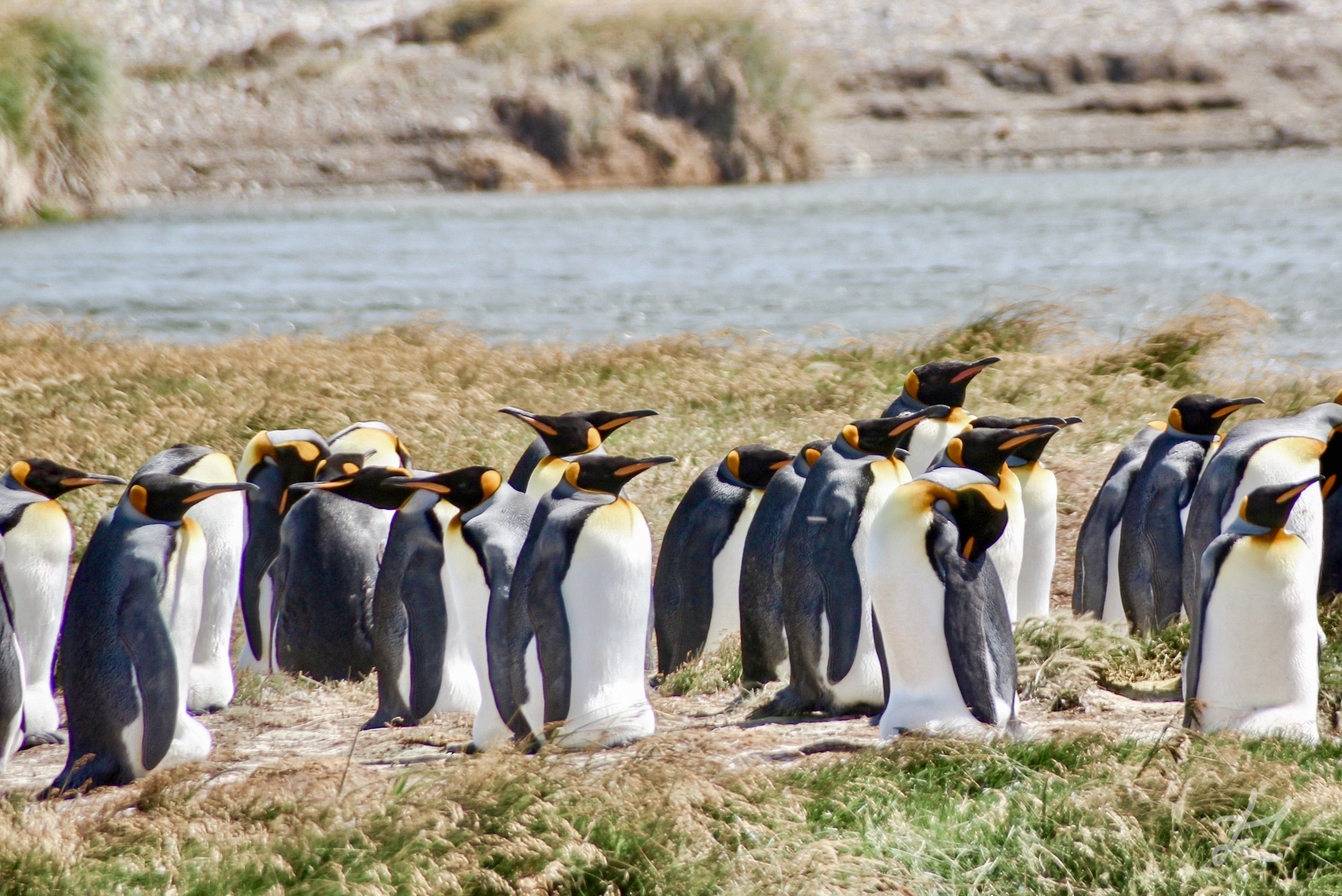
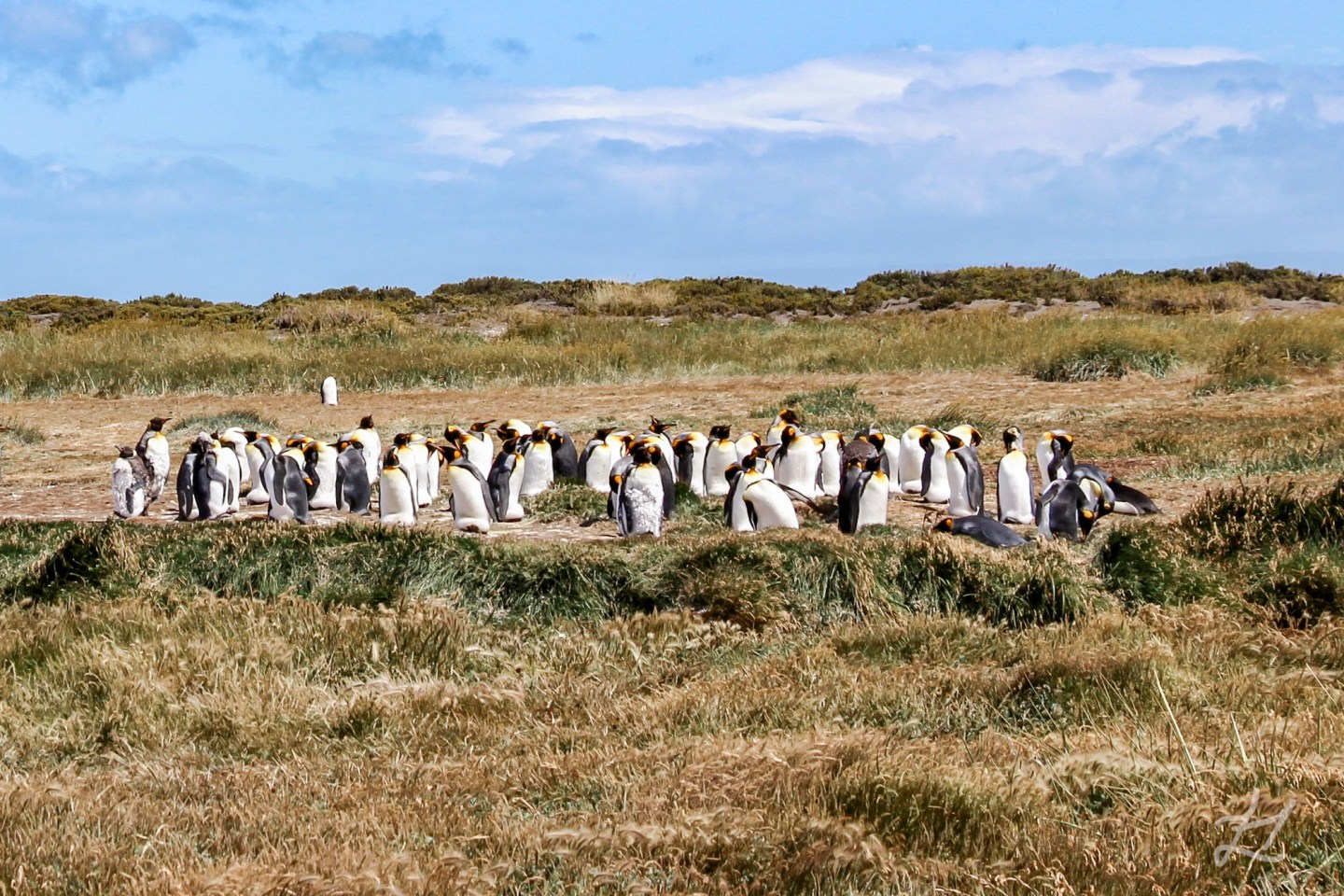
This is the only King Penguin colony on the South American mainland. Unlike the Magellanic, they’re tall (up to a metre) and their colouring is extraordinary: slate grey, black, and flashes of deep orange around the neck and head.
The colony is split between the river mouth and an inland area, and even from a distance, they command attention. They’re quiet, poised, and elegant. Be sure to look out for their fluffy “teenagers” moulting awkwardly into their adult feathers.
My tour was with Go Patagonia, and it involved a bus, a ferry ride (cue: hold onto your hat), before an hour at the reserve itself. You view the penguins from a respectful 40 metres away from a raised platform – this is where binoculars are handy! Then all the travel was in reverse on the way back to PA.
Travelling Responsibly Around Wildlife
Penguins may look unbothered, but they’re sensitive to noise, light, and sudden moves. If you’re visiting:
- Stick to marked trails
- Don’t use flash photography
- Speak quietly (or not at all)
- Never try to touch or approach them
Our presence should never come at their expense. Your best souvenir? A memory that didn’t ruffle any feathers! 😂
Planning Your Own Penguin Trip
🗓 Best Time to Visit
- September – penguins arrive and start nesting
- October – quieter, ideal for fewer crowds
- January–February – colony is at full strength, with chicks visible
🛳 Tour Operators
- Book with companies like Go Patagonia, Denomades or Solo Expediciones
- Isla Magdalena tours depart from Punta Arenas and often sell out in peak season
🎒 Packing Essentials
- Windproof layers, gloves, warm hat
- Charged camera or phone
- Binoculars (especially for King Penguin tours)
- Seasickness medication
- Snacks and water
- Sturdy shoes for boat ramps and trails
👶 With Children?
- Isla Magdalena: family-friendly and short
- Pingüino Rey: stunning but long—best for older kids or solo travellers
Have You Met a Penguin in the Wild?
Seeing penguins in Patagonia was never on my original itinerary. But it ended up being a highlight!
Have you seen penguins in the wild? Planning a trip to Patagonia or somewhere else on the penguin trail? I’d love to hear where you’ve been, or where you’re dreaming of going next.
Leave a comment below or come say hi on Instagram @loreandtempo.

Lore & Tempo is where motherhood meets adventure. I’m Ren – storyteller, explorer, and single mum in Wellington, New Zealand. I’ve been lucky enough to wander through 45 countries. 15 of them with my +1, Kaydes, either strapped to my front, on my hip, or running ahead on her own adventures. I created this space to share single parent life, travel tips, and the joy of exploring the world.

Loved your pictures. I’m looking forward to seeing these colonies with you and KayDe. Love mumR/nanR
Sent from my iPhone