

My pregnancy with Kaydes seemed surprisingly smooth, considering my pre-existing medical condition, congenital Panhypopituitarism. After years of managing this rare endocrine disorder, I was amazed at how well my body handled pregnancy!
Despite some common discomforts, such as persistent heartburn, frequent urination, and blocked ears, everything seemed manageable. I was especially fortunate not to experience the severe nausea that many others face. I knew how lucky I was to conceive via egg donation and to have things progress as smoothly as they did. Then came the zigzag to the finish line.
A Heads Up
On Tuesday, 5th October, at 34 weeks pregnant, I was on my way to a work meeting. While waiting for my bus, a stranger approached and asked if I had been checked for preeclampsia. My last check-up showed fine levels, so I reassured her and thanked her, but her question stuck with me.
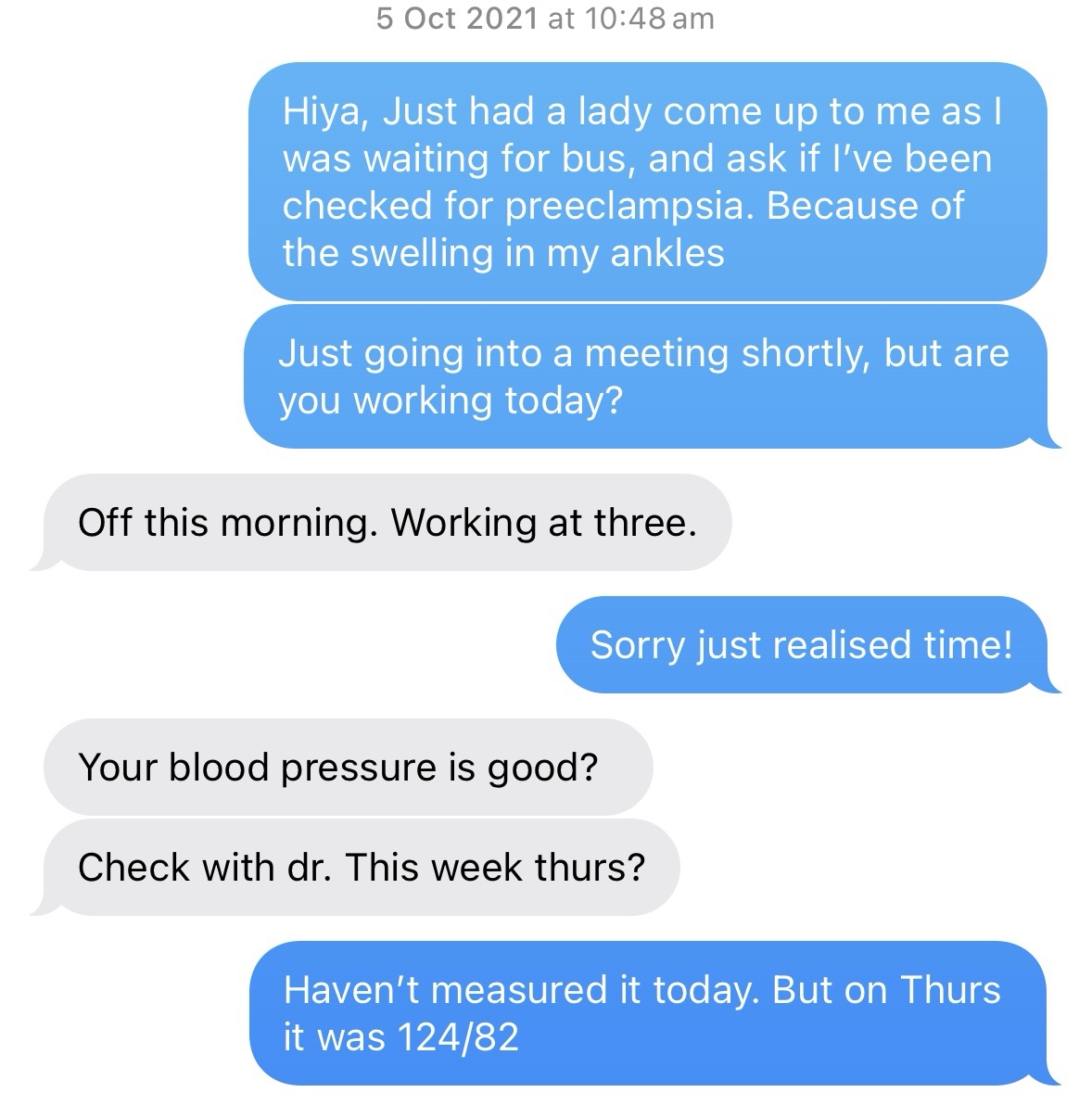
I ended up texting my mum – who happens to be a neonatal nurse in Australia – just to make sure I wasn’t overlooking anything. For those unfamiliar, preeclampsia occurs when a mother develops high blood pressure during pregnancy, limiting the baby’s access to oxygen and nutrients.
After some back-and-forth with my mum, she strongly suggested I see my midwife. That afternoon, I went to Wellington Obstetrics to have my blood pressure checked. To both of our surprise, it had skyrocketed to 160/100 – a sharp jump from my previous readings. Without hesitation, my midwife sent me to Wellington Hospital for further monitoring.
The Week That Changed Everything
That hospital stay confirmed what we had feared: I had preeclampsia. They immediately put me on Labetalol to reduce my blood pressure, and I underwent numerous tests – blood work, protein checks in my urine, and continuous fetal monitoring. The only silver lining in all the testing was hearing my baby’s steady heartbeat through the TOCO monitor.
My goal was to reach at least 36 or 37 weeks of pregnancy so Kaydes would have more time to grow. But by Friday, my blood pressure was still unstable, so they added another medication, Nifedipine. While this helped, it also gave me uncontrollable jitters and affected my reflexes. Despite my hopes, the betamethasone steroid injections I received to accelerate my baby’s lung development were the clearest sign that delivery was approaching sooner than expected.
By Sunday night, I was extremely tired, and just wanted to sleep. I had a Unisom sleep capsule, but my body and pregnancy had other ideas. My blood pressure spiked dangerously to 181/82, leading to my final hospital admission before delivery. By early Monday, they found protein in my urine (47mg/mmol), and I was immediately placed on a fast. My obstetrician’s Monday morning exam confirmed the worst – severe preeclampsia had fully set in. I had sustained clonus, which means my muscles were involuntarily contracting, and hyperreflexia, where my reflexes were overactive. Both meant immediate delivery was necessary to prevent complications.


The C-Section
In the very early hours of Monday morning, I had sent my husband home to gather a few things, including makeup. When the nurse arrived to take me to the operating room, she seemed surprised to find me applying mascara! For me, it was about getting a bit of confidence for the huge moment ahead, meeting the little human who will change my life.
As they wheeled me into the delivery room, it felt almost out-of-body. The room was a lot bigger, brighter and busier than I thought it was going to be! I hadn’t grasped how important the operation was until then! I had been more preoccupied with how and what I might feel with Kaydes’ delivery. But I shouldn’t have worried, as the spinal block worked very well, then everything felt like it was happening in fast-forward.
I’m grateful to the nurse who offered to take photos of the delivery. Those pictures are precious reminders of a day that was both overwhelming and miraculous. I remembered my friend Liv’s tip about using ‘Live’ mode, so I could watch the moments unfold like a video later.
At 9:32 a.m. on 11th October, my daughter Kaydes was born. At 35 weeks and 2 days, she weighed 2.62kg, measured 46cm, and cried loudly – probably missing the warmth of my womb already!


NICU & Recovery
We followed through with our plan for delayed cord clamping, and I held her skin-to-skin for a brief moment. She was covered in vernix and needed help with her breathing. The team put her on CPAP for about nine minutes. Her low blood sugar required monitoring, but I felt immense relief knowing she was here and safe. I remember holding Kaydes and breastfeeding her in recovery, but everything became a blur after that. She went to NICU that night, and I fell asleep – or more accurately, passed out from exhaustion and all the meds in my system.
The next day, I faced a setback of my own. My C-section wound wasn’t healing properly, so my obstetrician put me under general anaesthetic again to fix it.
I’ll never forget waking up one morning to discover a flood in my hospital room. To my horror, it wasn’t water. My catheter bag had burst, soaking most of Kaydes’ clothing – a shock that left me on the verge of tears. The blood pressure pills caused so much extra urination that I also dropped all the pregnancy weight in days – an unexpected silver lining! Between all the medication, hormones, and physical recovery, I was just trying to keep it together.
Kaydes stayed in the NICU for almost two weeks while they monitored her jaundice, low blood sugar, and provided nasal gastric feeds. After my own discharge, I visited her at least twice a day, taking the bus to the hospital. I sat by her incubator, willing her to get stronger. Those days drained me both physically and emotionally, and being separated from her so soon after birth was hard to bear. But I trusted she was in safe hands.


Finally, on 29th October, she was discharged and we brought Kaydes home.
Reflections
The birth story of Kaydes was far from what I had imagined, but it’s one I’ll never forget. While the experience was daunting, I now realise how many things went right, even when so much felt out of control.
Motherhood, like life, doesn’t always follow the path we plan. But it’s the detours that shape us, preparing us for the road ahead.

Lore & Tempo is where motherhood meets adventure. I’m Ren – storyteller, explorer, and single mum in Wellington, New Zealand. I’ve been lucky enough to wander through 45 countries. 15 of them with my +1, Kaydes, either strapped to my front, on my hip, or running ahead on her own adventures. I created this space to share single parent life, travel tips, and the joy of exploring the world.
