
The Yucatán Peninsula in Mexico one of those places I’ve experienced in two completely different ways.
I first travelled through it solo in April 2016, navigating everything by ADO bus, figuring things out as I went. Years later, I returned with my mum and my daughter, still navigating places by ADO, but seeing the same places through a completely different lens.
Some places felt exactly as I remembered. Others surprised me. And a few completely reshuffled my list.
Here are eight of the best places in the Yucatán Peninsula – not just for what they are, but for how they actually felt across both trips.
1. Bacalar
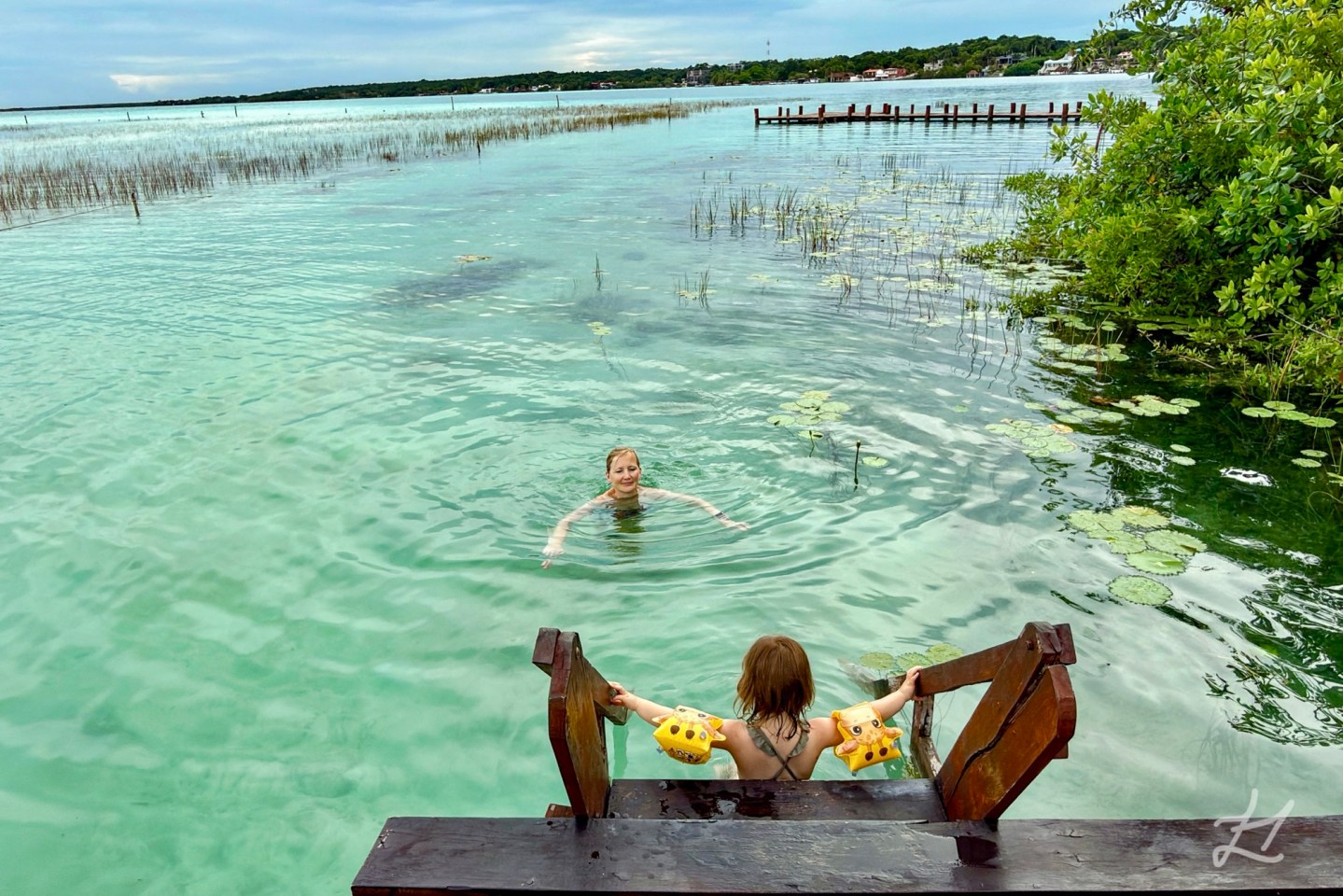
Pictured above, Bacalar ended up being one of my favourite highlights in Mexico. Known as the Lagoon of Seven Colours, the water shifts through different shades of blue depending on the depth, sunlight, and mineral content. It’s fed by cenotes and underground rivers, which gives it that incredibly clear, almost glass-like quality.
But what stood out most wasn’t just how it looked — it was how it felt.
There’s a calmness to Bacalar that’s hard to describe properly until you’re there. Boats move slowly, voices stay low, and the pace feels unhurried. It doesn’t feel overbuilt or overly polished -yet!
Historically, Bacalar was repeatedly attacked by pirates in the 17th century, which led to the construction of Fort San Felipe. You can still visit it today, quietly overlooking the lagoon, a reminder of a very different past.
We loved it. Completely. It’s one of the few places in Mexico, I’d return to purely to experience that same feeling again. It completely bumped Tulum off my number one spot!
2. Valladolid

A battler for my number 1 Yucatán spot, but happily takes second is Valladolid. Founded in 1543 on top of a Maya settlement, it carries its history in a way that feels present but not overwhelming. The pastel buildings, the rhythm of daily life, and the central square all contribute to a town that feels grounded and easy to be in.
The main square became a focal point for us. Almost every time we arrived, something was happening – church gatherings, music playing, and at one point, traditional dancers performing just before the rain came in. We happened to be there in the lead-up to Mexican Independence Day, which added another layer of energy to the evenings.
We stayed at Hotel Fundadores, just two blocks from the square, and that location made a huge difference. Everything felt accessible. We could move between the hotel and town without planning it.
3. Chichén Itzá

Chichén Itzá remains one of the most impressive archaeological sites in the Yucatán.
At its peak, it was one of the largest Maya cities, and today it stands as one of the New Seven Wonders of the World. El Castillo, the central pyramid, is known for its precise alignment with astronomical events, particularly during the equinox when light and shadow create the illusion of a serpent descending the steps.
Walking through the site, you also pass the Temple of the Warriors, the Great Ball Court, and the Sacred Cenote, each tied to different aspects of Maya life, from religion to sport to sacrifice.
It’s undeniably busy now, more so than I remember from my first visit. But even with the crowds, and constant calling vendors, the scale and historical significance are hard to ignore.
4. Akumal
Akumal remains one of the most memorable experiences I’ve had in the water. Its name means “Place of the Turtles” in Maya, and the bay lives up to it. The water is calm, shallow, and clear, which makes it ideal for snorkelling.
On my first visit, I booked a guide directly after getting off the bus. Within minutes, he pointed out a sea turtle gliding past, then another, and another. Watching them move so effortlessly through the water felt surreal.
There’s something about that kind of encounter that stays with you. It’s not rushed, not staged – just you, in the water, sharing space with them.
5. Mérida

Mérida is where the region’s history feels most layered.
Founded in 1542 on the site of the ancient Maya city of T’ho, much of its colonial architecture was built using stone from those original structures. That contrast is still visible today.
The city itself feels larger and more structured than places like Valladolid, but it still has a strong sense of identity. Paseo de Montejo, with its grand homes and European influence, offers a very different feel to the bustling markets and local neighbourhoods.
I remember being drawn to the architecture immediately. It was one of the main reasons I made the trip there, and it didn’t disappoint. Mérida feels like a place you could keep exploring beyond a short visit.
6. Tulum Ruins

Perched on a cliff overlooking the turquoise waters of the Caribbean Sea, the Tulum Ruins are a spectacular sight. Unlike other Mayan cities, Tulum was a thriving port city, and its strategic location made it a crucial trading hub. The site’s stunning backdrop makes it one of the most picturesque ruins in Mexico.
One of the most fun aspects of visiting the Tulum Ruins is the iguanas basking around in the sun. These fascinating creatures are everywhere, lounging on the ruins and blending in with the ancient stones.
7. Cenote Santa Cruz
Cenotes are one of the defining features of the Yucatán Peninsula. Formed by the collapse of limestone, they were sacred to the Maya and believed to be entrances to Xibalba, the underworld. They were used for both practical and ceremonial purposes.
Cenote Santa Cruz stood out as a quieter, more relaxed option. Surrounded by greenery, with clear water and a less crowded feel, it offered a slower pace compared to some of the more popular cenotes in the Yucatán.
Swimming in a cenote feels different to the ocean. Cooler, stiller, and slightly more enclosed. It’s a unique experience that’s worth prioritising.
8. Cancún & Zona Hotelera

Cancún often gets dismissed as overly touristy, but it still delivers on what it promises.
The Zona Hotelera is designed for ease. Long stretches of beach, clear water, and everything set up to make a stay feel simple.
It was noticeably hotter during our September visit, but the beaches were still just as good. And unexpectedly, we saw a baby flamingo, which felt like a small moment of luck, especially since we didn’t make it to Isla Holbox this time.

Lore & Tempo is where motherhood meets adventure. I’m Ren – storyteller, explorer, and single mum in Wellington, New Zealand. I’ve been lucky enough to wander through 45 countries. 15 of them with my +1, Kaydes, either strapped to my front, on my hip, or running ahead on her own adventures. I created this space to share single parent life, travel tips, and the joy of exploring the world.
