
Located in the southeastern region of Peru, Tambopata National Reserve is a dream for nature lovers and adventure seekers alike. Covering over 1.5 million hectares!, it’s a haven for some of the world’s most diverse wildlife, just living their best lives! 🐒
The Amazon is such a huge area, you’d be forgiven thinking it was only located in Brazil like I originally did. It actually spreads into 8 other countries, including Peru. I flew from Lima to Puerto Maldonado, for easy access to this part of the Peruvian Amazon. I spent four days at a Lake Sandoval lodge, where my time was spent touring very intrepidly, spotting wildlife, and hanging out in spectacular scenery!
Lake Sandoval is one of Peru’s largest oxbow lakes, made when a tributary changed direction. Around its shoreline, Mauritia palm trees make a gorgeous backdrop especially at sunrise when they glow. Each day began with the chorus’ of different animals, and here’s some you can see hanging about!
– Red Howler Monkeys: The Jungle’s Alarm Clock
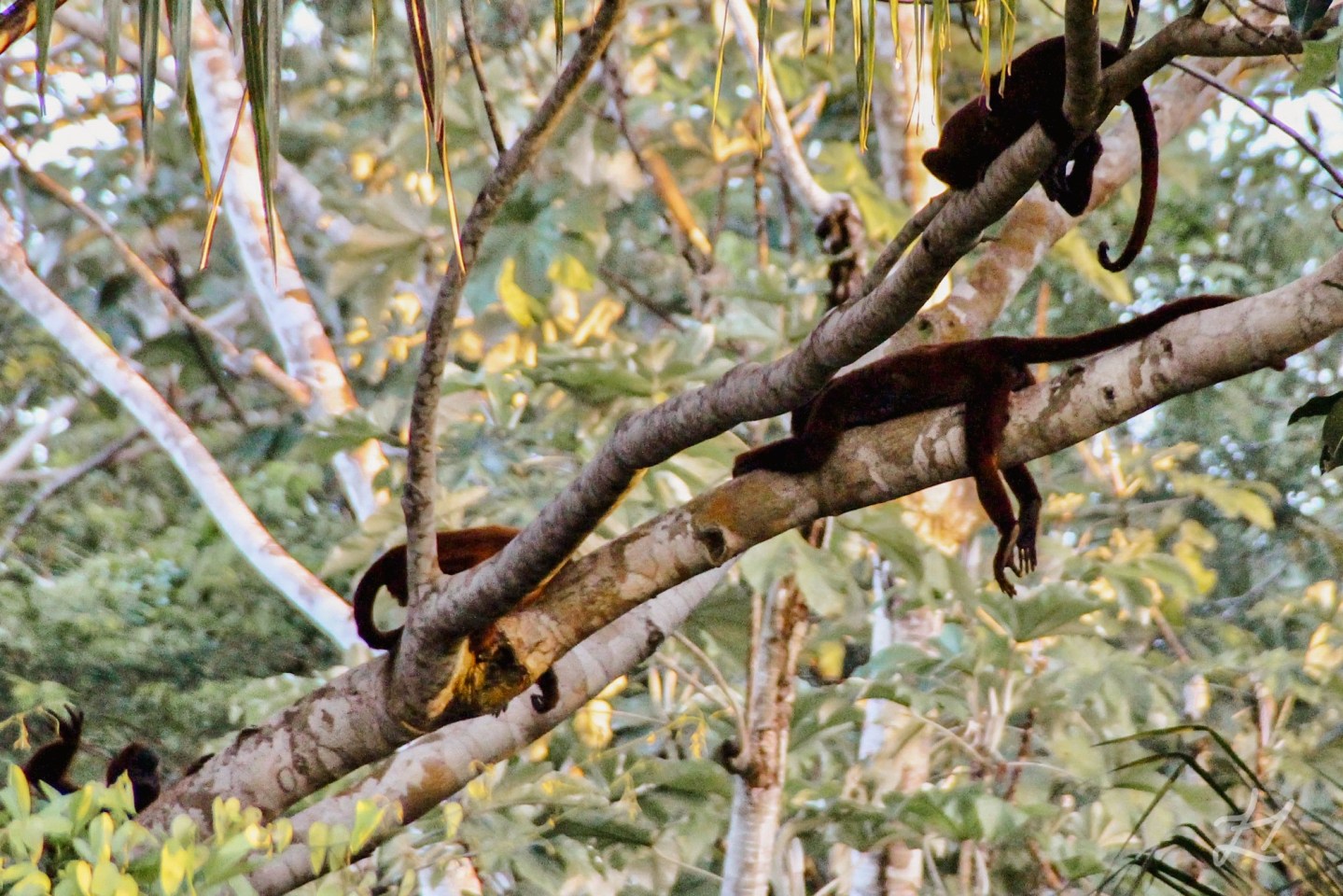
Pictured above, these monkeys are amazing, and I had no idea they existed until I heard them! I was walking on a trail spotting colourful butterflies and other insects, when a booming static-like sound enveloped the air. My guide pointed me to the treetops, where some of these monkeys were lazing about, and making this ‘howling’ noise.
These primates act as the jungle’s natural alarm clocks, with their distinctive calls echoing through the trees at dawn and dusk. Their unmistakable call is produced by their baggy throat and enlarged hyoid bone. Their vocalising is territorial and developed as a result of their diet of hard-to-digest leaves, which leaves little energy for much else.
Red Howlers are social animals, often found in groups high in the canopy, where they feed on leaves, fruits, and flowers. Their diet is low in energy, which is why they spend a lot of time resting. Spotting them lounging in the trees, with their reddish fur contrasting against the green leaves, was a lovely sight.
Did you know that a Howler Monkey’s call can travel up to 5 kilometres?!!
I made a vlog about my Tambopata Amazon adventures, including the Howler calls (timestamp 0:52).
– Giant River Otters: Guardians of the Lake
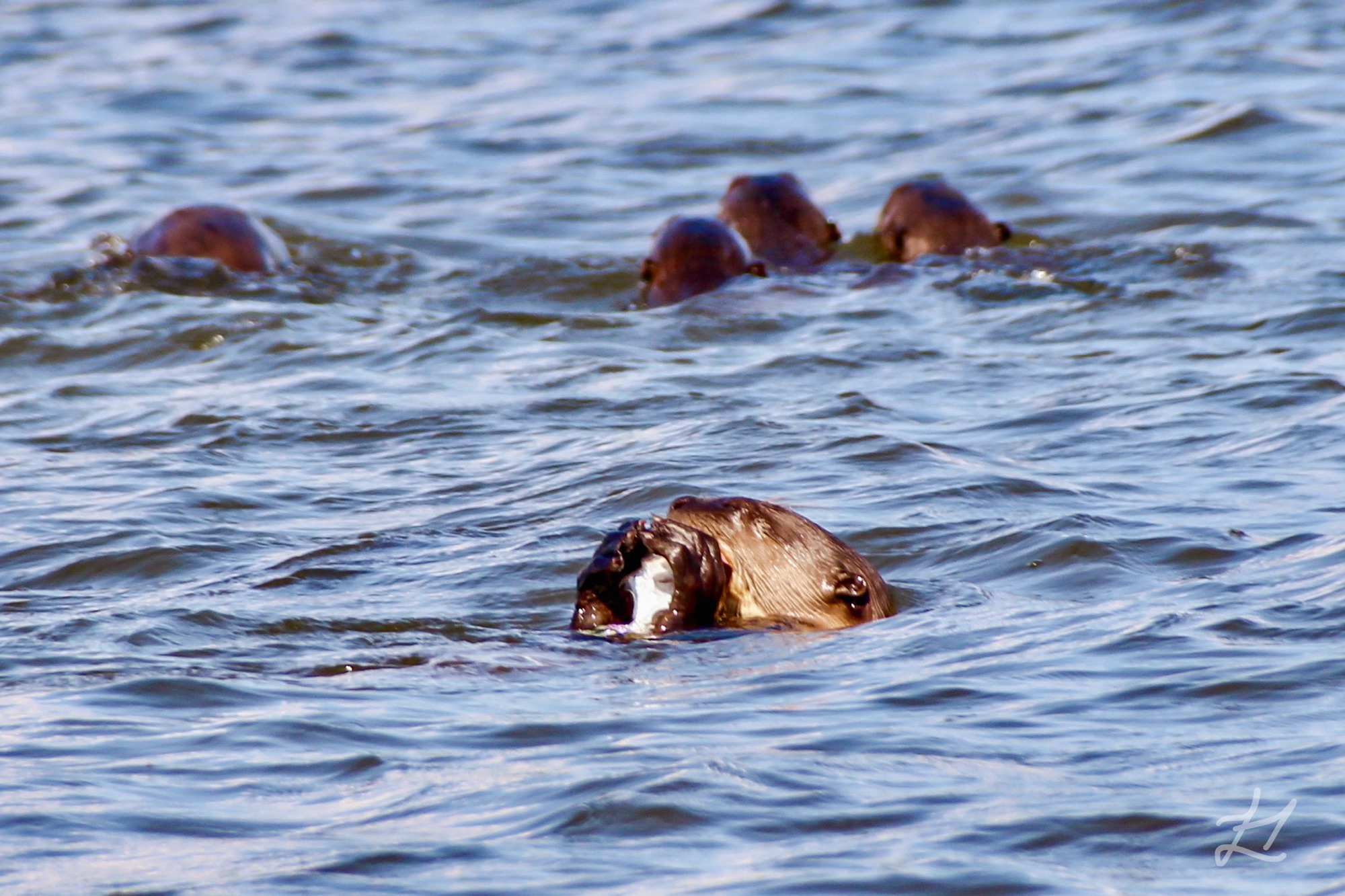
Among the many amazing animals in the Tambopata Reserve, the Giant River Otters were a highlight of my journey. These otters, known as “river wolves” to the locals, are the largest member of the weasel family, and can grow up to 1.85m long – taller than my 1.53m! In a row boat on Lake Sandoval, under the hot sun, with camera in hand, waiting to capture otters. It was my idea of paradise for sure!
Lake Sandoval is one of the last strongholds for these endangered creatures, making it a crucial conservation area. The otters are social animals, living in tight-knit family groups that work together to hunt and protect each other from predators like the black caiman. Their teamwork is impressive, and I was fortunate enough to see them in action, catching and eating fish. The moment I saw an otter surface, with a fish clamped between its powerful jaws, I was in awe. Their sleek, muscular bodies are built for speed, allowing them to glide easily through the water as they hunt.
The otters have a range of sounds, from whistles to growls, which they use to coordinate their activities and keep in touch with their family members. To be honest, they’re not as cute as the smaller size of the species. But their cute calls and squeaks to each other, helped win me over.
– Squirrel Monkeys: The Tiny Acrobats


If there’s one monkey that embodies the playful spirit of the Amazon, it’s the Squirrel Monkey. Squirrel monkeys are the easiest animals to find in Peru’s Amazon forests, especially at ‘Monkey Island’ in the mornings when they were most active. Their boundless energy and quick movements through the treetops were so mesmerizing.
Squirrel Monkeys are highly social, often living in large groups of up to 100 individuals. Watching them interact with each other was like witnessing a well-choreographed dance. Their curiosity was amusing too. They often came closer to us, seemingly just as interested in observing us as we were in them.
Even more impressive are the mothers that carry multiple babies on their backs and jump with them on! – not too far though! It’s incredible how they balance their young while navigating the forest with agility.
– Macaws and Hoatzin: The Colourful and the Curious


The Amazon is a treasure trove of unique and fascinating wildlife, and two of its most captivating bird species are the vibrant Macaws and the curious Hoatzin. These birds, while very different in appearance and behaviour, each offer a glimpse into the rich diversity of the Tambopata National Reserve.
Macaws are the jewels of the rainforest, their vivid plumage catching the eye as they glide through the canopy. With feathers painted in bright reds, blues, greens, and yellows, these large parrots bring a burst of colour to the dense green foliage. Their loud, echoing calls are a signature sound of the Amazon, a reminder of the untamed wilderness all around. Hiding low in the foliage watching them fly around the treetops, is a vivid memory that I’m looking forward to repeating one day soon.
In stark contrast to the vibrant Macaws, the Hoatzin offers a more subtle yet fascinating presence in the Amazon. Often referred to as the “stinkbird,” the Hoatzin is known for its unique digestive system. It ferments leaves in a specialised stomach, producing a strong odour! This prehistoric-looking bird, with its spiky crest and blue facial skin, is a reminder of the ancient history of the Amazon.
Which bird would you be more excited to see in the wild? The colourful Macaw or the ancient Hoatzin? Share your thoughts and any birdwatching stories in the comments below.
– Capuchin Monkeys: The Clever Foragers
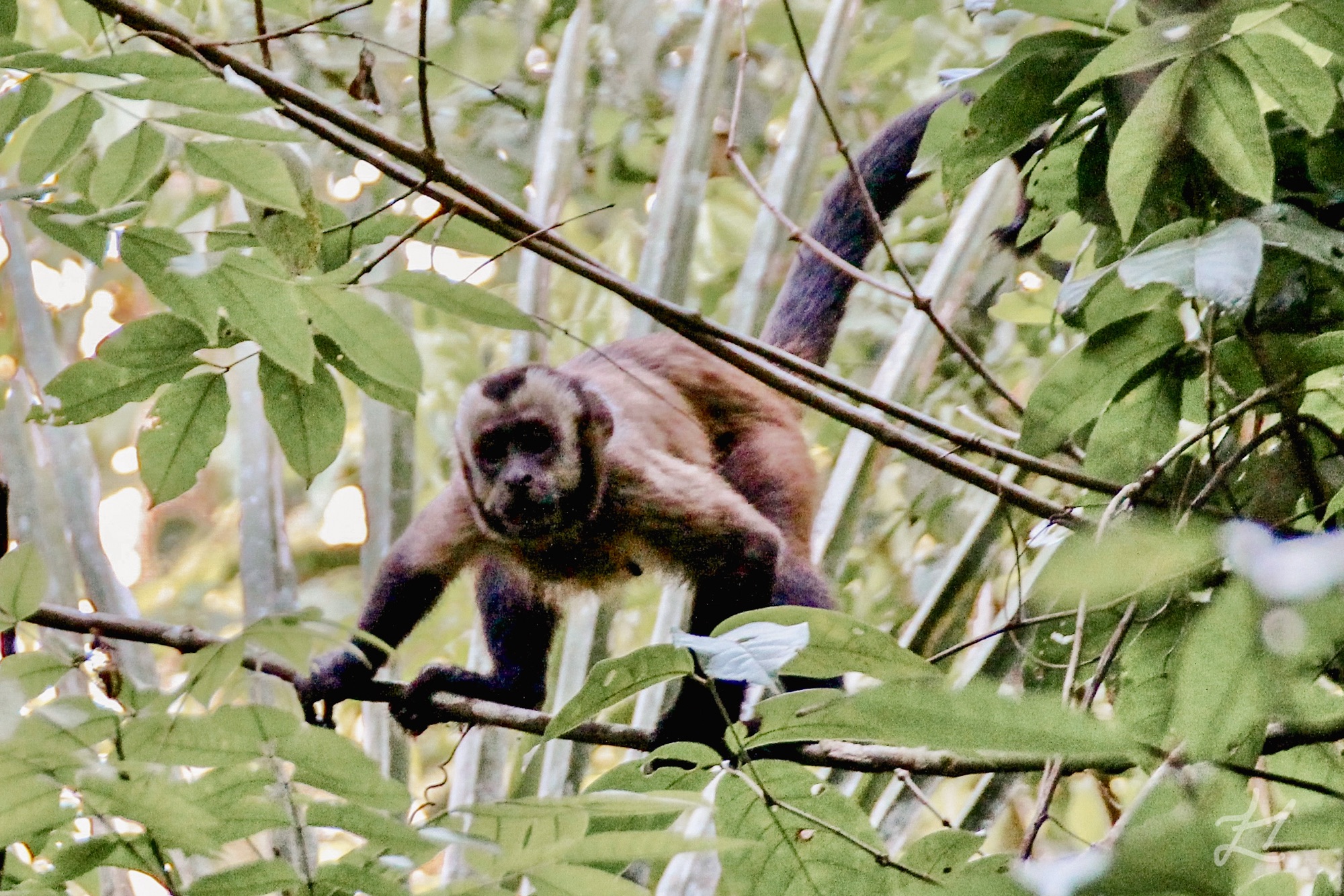
Capuchin Monkeys are the brainiacs of the jungle, known for their intelligence and resourcefulness. I met this one above, after having an afternoon nap while it rained. It was foraging for food with another capuchin, and it was fascinating to watch them use tools, like rocks, to crack open nuts or seed pods.
Capuchins are omnivorous, eating everything from fruits to small animals, and their dexterity is impressive. Their expressive faces and interactions with each other show a deep social structure within their groups. It’s no wonder they’ve been popular in movies and TV shows (Marcel the monkey from Friends). But seeing them in their natural habitat was a whole different experience.
If reading about my trip has sparked your curiosity, why not start planning your own Amazon adventure?
Peru is a fantastic gateway to this incredible ecosystem. Whether you’re a seasoned traveller or a first-timer, Tambopata offers something unique for everyone. My YouTube video is linked on the right, and here’s a few tips to get you started:
Where to stay: Choose an eco-lodge that prioritises sustainability and supports local communities.
When to go: The dry season (May to October) is generally the best time to visit Tambopata National Reserve. The trails are easier to navigate, and wildlife is easier to spot.
What to pack: Lightweight, long-sleeved clothing, rain jacket, insect repellent, binoculars, and a good camera are essentials.
What wildlife would you most like to encounter in the Amazon? Share your wildlife bucket lists in the comments!

Lore & Tempo is where motherhood meets adventure. I’m Ren – storyteller, explorer, and single mum in Wellington, New Zealand. I’ve been lucky enough to wander through 45 countries. 15 of them with my +1, Kaydes, either strapped to my front, on my hip, or running ahead on her own adventures. I created this space to share single parent life, travel tips, and the joy of exploring the world.

Thanks for the great info. Who knows, it’s far more interesting than I thought, love the monkeys, I might go.
Author
So glad you enjoyed it! The monkeys are total show-stealers 🐒